Mastering Japanese
日本語習得への道
From absolute beginner (N5) toward advanced JLPT study (N1). A modern hybrid-immersion strategy linking AI coaching, active spaced repetition, and contextual reading.
The Hybrid-Immersion Strategy
Traditional approaches often over-focus on dry grammar lists and isolated vocabulary words. Building usable Japanese is easier with a hybrid-immersion model: backing up structured input systems (textbooks/SRS)with direct contextual contact (reading/speaking).
By utilizing local-first flashcards, checking translation grammar breakdowns, and speaking with Live Voice tutors, you map patterns naturally into your long-term memory.
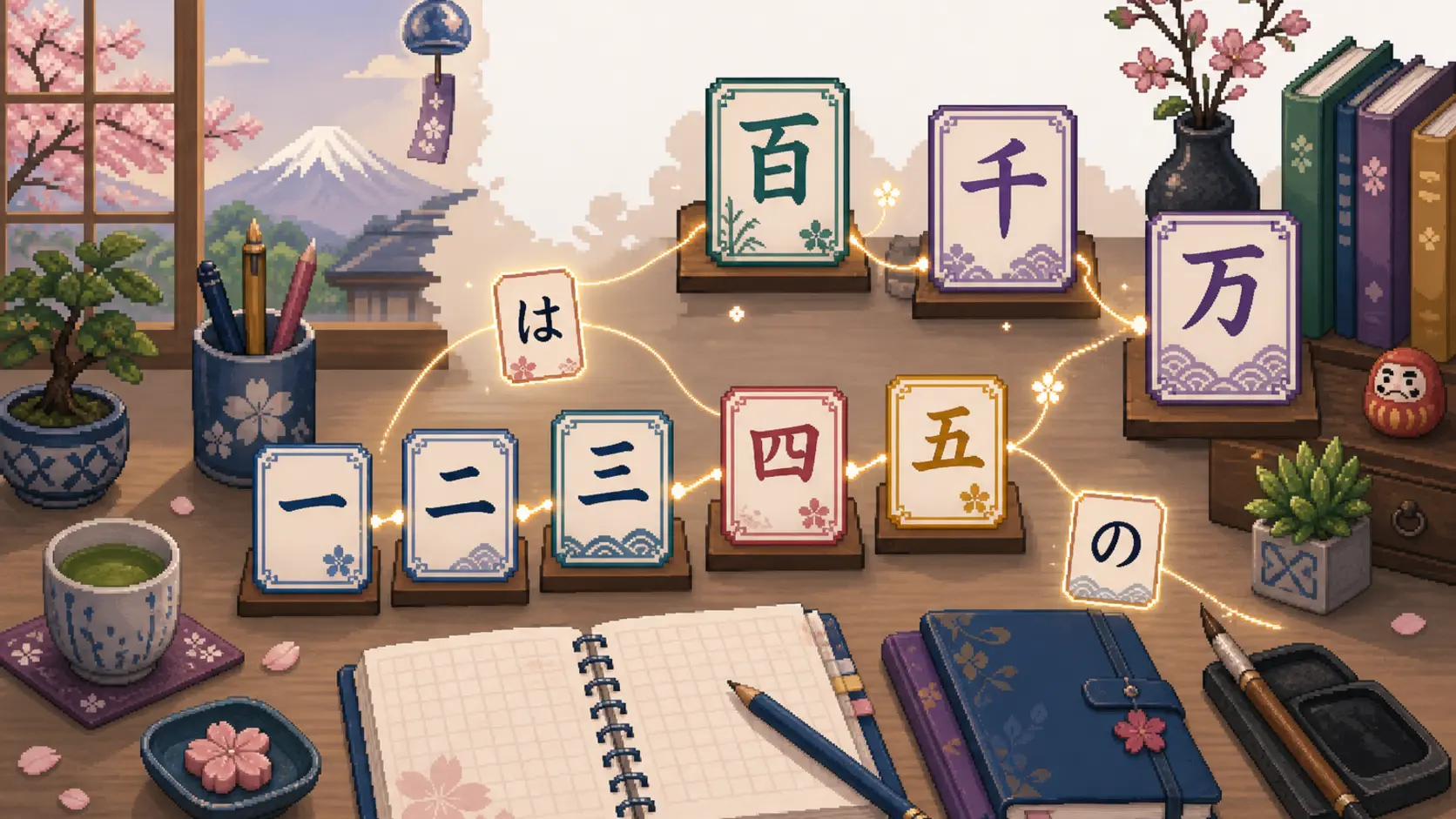
Four Pillars of Acquisition
1. Kana Foundation
Mastering Hiragana and Katakana characters immediately, without relying on romaji, to enable direct native reading.
2. Spaced Repetition
Employing an FSRS spaced-repetition workflow to systematically retain new Kanji and vocabulary points.
3. Natural Context
Evaluating grammar rules directly inside complete phrases rather than studying raw academic tables.
4. AI-Augmented Coach
Using custom AI queries to break down nuances, practice speaking scenarios, and synthesize native audio.
Learning Volume Matrix
Cumulative targets and hours required per JLPT grade.
Figures are widely-cited approximations — the JLPT does not publish official kanji or vocabulary lists.
Step-by-Step Milestones
Key challenges and applications recommended for each level.
The Starting Line
Begin with the absolute essentials: learn Hiragana and Katakana phonetic scripts, basic particles, and simple polite present verbs.

Key Challenge
Adapting to non-Latin script spelling patterns and phonetic stroke order rules.
App Strategy
Complete study book chapters 1 to 9, use Kana Quiz drills daily, and establish a baseline memory schedule.
Ordering food at restaurants, introducing yourself, and reading simple signages/menus.
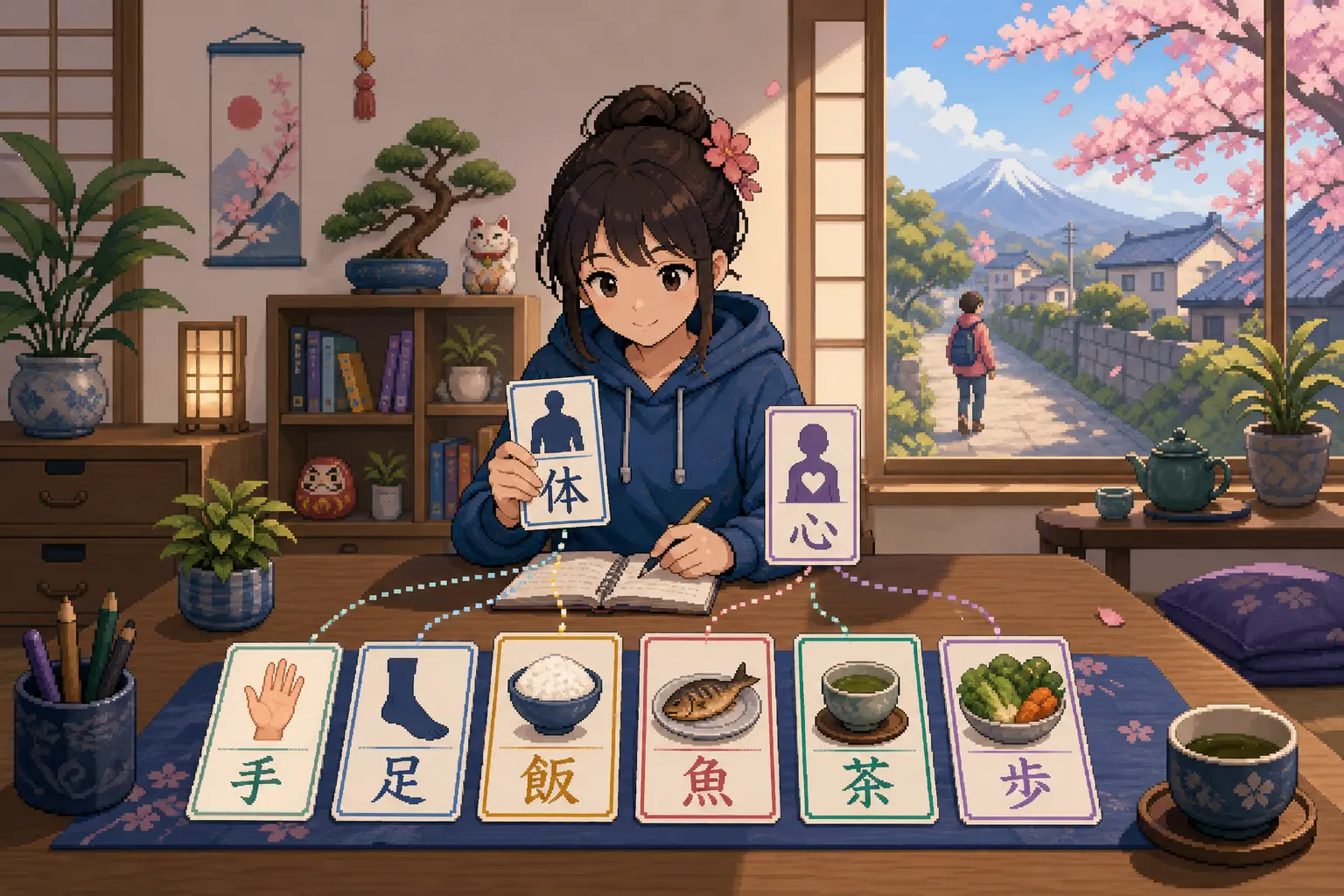
The Daily Communicator
Focus on past-tense conjugations, basic relative clauses, potential modes, and everyday kanji markers.
Key Challenge
Adapting to verb-final word ordering and relative clauses describing nouns.
App Strategy
Study chapters 10 to 25, run active vocabulary flashcard decks, and practice dialogue scenarios with AI.
Writing simple personal diaries, understanding slice-of-life anime dialogues, and carrying out casual talks.
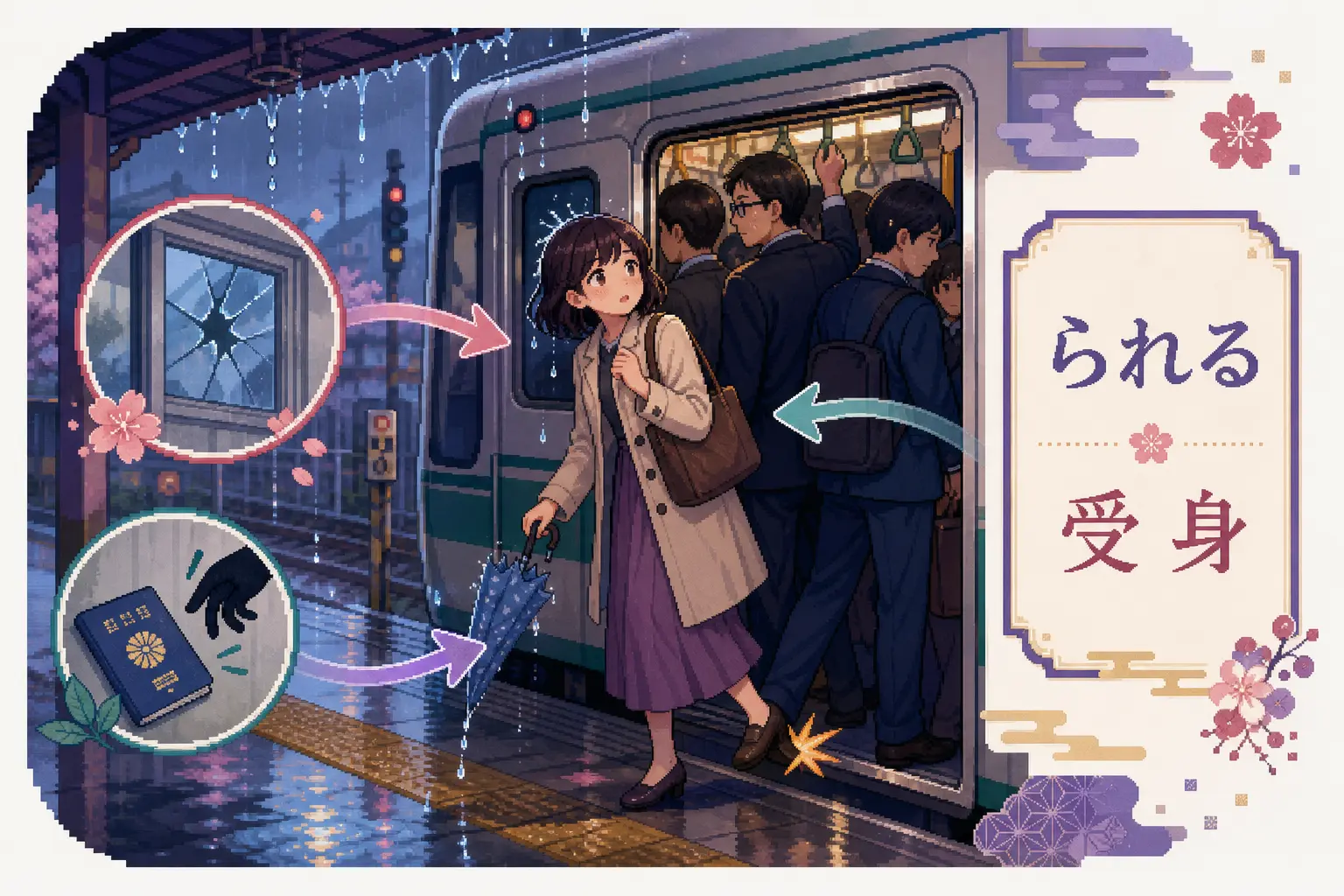
The Functional Bridge
Begin expressing opinions, hypothetical relationships, passive constructs, and causative statements.

Key Challenge
Understanding casual speech pacing. Listening items are heard only once in exams.
App Strategy
Query the AI teacher to detail grammatical differences like 'tame ni' vs 'you ni', and read intermediate stories.
Reading basic Japanese newspaper articles, understanding daily blogs, and handling travel encounters.
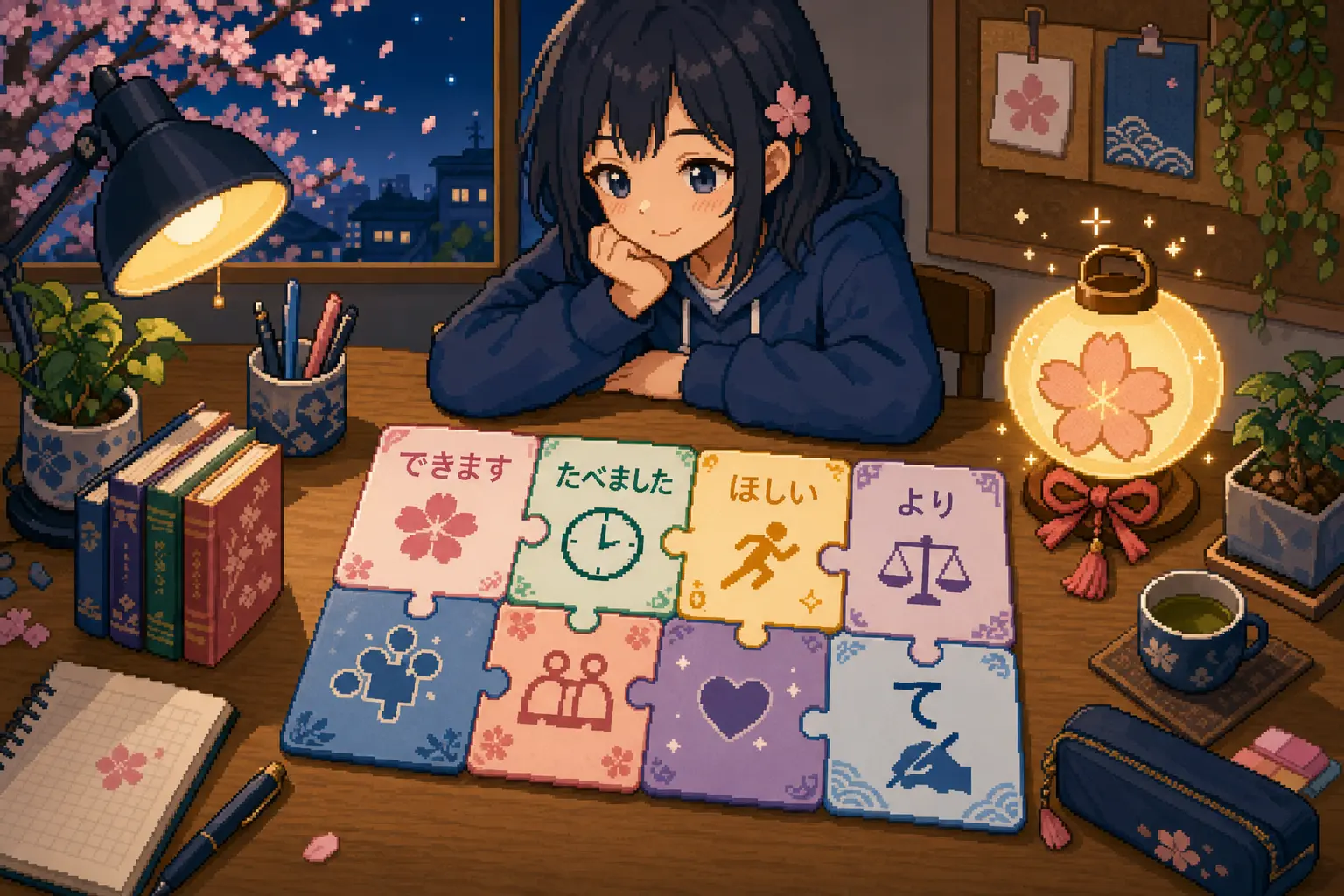
Professional Competence
A common benchmark for professional environments. Requires reading news reports, publications, and mastering formal keigo rules.
Key Challenge
Abstract and idiomatic vocabulary size (over 6,000 words).
App Strategy
Practice Live Sensei business setups. Read natural articles and translate complex layouts.
Working inside business settings in Japan, reading novels, and fully digesting native broadcasts.
Advanced Mastery
Ability to read abstract critiques, literary prose, follow rapid conversations, lectures, and understand deep historical references.
Key Challenge
Archaic literary structures, extreme sentence lengths, and highly specialized topics.
App Strategy
Use AI reasoning to dissect literary styles, analyze historical contexts, and verify complex readings.
Reading academic research, discussing specialized trade topics, and complete fluid immersion in Japanese culture.
The 1% Rule
Daily incremental micro-lessons beat weekly cram cycles.
Study Daily
15–20 minutes of daily local-first reviews builds strong muscle memory.
Contextual Focus
Always study cards and rules nested in complete phrases, not isolated lists.
Tolerate Ambiguity
You won't recognize every Kanji instantly. Keep going; reading triggers recognition.
Ready to advance?
頑張ってね! Do your best! Browse the study guide chapters or check the beginner instructions.